FP - August Spotlight - AstroWhat?

Lord Saru

Seasoned Veteran
Joined
Feb 21, 2010
Messages
4,228
Reaction score
817
FP$
10,493
Forum Promotion - August Spotlight
LzIGeB.png


Welcome to the August edition of the Forum Promotion Site Spotlight

From time to time, we shine the spotlight on a forum, blog, community or channel, introducing the FP community to new and exciting sites, or helping everyone get reacquainted with some beloved existing ones. Here comes the July Spotlight!


❣️ Featured Website: AstroWhat?❣️ by @TPerry
AstroWhat? is a forum where astronomy and photography come together

Do take a look by clicking the banner below -
Screenshot 2025-08-01 at 10.00.14 AM.webp


⭕ Since its a highly specialised niche, we decided to talk a little more about it ⭕
Astro What?
was established as a dedicated resource hub for enthusiasts within the specific niche of astronomy, offering curated articles, reviews, and tools. It also features a forum to facilitate community discussions, with many resources and reviews incorporating integrated comment sections.

Over time, the platform has become a primary source for several legacy software tools no longer supported by their original developers. A notable example is PIPP (Planetary Imaging PreProcessor), widely used in the planetary capture community, with the latest version being downloaded over 26,000 times.

According to Cloudflare analytics, Astro What? receives an average of 127,000 unique monthly visitors and handles approximately 280GB of data transfer each month.


:aussiecongaparrot: Here is an interesting insight into AstroWhat? :aussieparrot:
  • AstroWhat? has a very rare resource - How to Install N.I.N.A(astronomy photography suite) and KStars/EKOS/INDI(Night sky simulation)​


📆 Stay tuned for more 📆
Want to get your website/forum/blog into the spotlight? Please PM me. I dont bite <3


Remember, each month we feature a different community, so keep an eye out for September spotlight. Who knows what exciting channel, forum, or blog we’ll highlight next!

Thank you for being an active part of Forum Promotion!​
 
@TPerry how long did it take you to do photography of deep space?
 
@TPerry Out of curiosity, what is EKOS? Can you explain?
EKOS is one aspect of the KStars/Indi/Ekos (which runs under Linux) package, which is ultimately a series of packaged software that makes collecting astronomical images easier as it include most drivers for the majority of hardware used in the niche, it also has a planetarium package included and the EKOS software easily interfaces the drivers with the planetarium software to make data acquisition easier.
KStars is the "planetarium" part of the package.
EKOS is the interface between the planetarium package and the user and the hardware diver software..
INDI is the actual driver portion of the collection software that allows the two above to work to collect data like this.

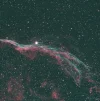
NGC 6960 072525 v1.webp

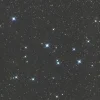
M39 CarbonStar RC6 072025 v1.webp

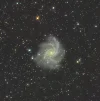
NGC6946 RC6 533MCP 062425 v2.webp

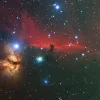
B33 AP72mm ASI533MC Pro IV-IR v3.webp

There is also a Windows based alternative that is named N.I.N.A. (Nighttime Imaging 'N' Astronomy) which many use. I am comfortable with Linux and tend to lean towards that OS.
 
@TPerry how long did it take you to do photography of deep space?
To be brutally honest.. too damn long before I finally grasped what I needed.
I started in 2018... and quickly gave up because the hardware and software I had was not user friendly and my knowledge was not where it needed to be.
About 3-4 years later and a lot of research.. I was in a more comfortable level when I purchased more modern hardware (getting away from a DSLR and to a dedicated astro camera). At that point (and a lot more money for software to do processing) I was in a zone I was finally comfortable with.
 
My God, these are amazing!

I thought we could capture such images only with very advanced and expensive cameras!

This is new to me.
Thanks.
It depends on what you call expensive. The cameras themselves are around $1500-$3000 each that I currently use (including filters). Each telescope rig varies from $3800 on the low end to around $9000 on the upper end (telescope OTA, filters, accessories, mount and tripod). And my stuff is not the top line stuff. You can quickly get into the $50,000 range for some rigs (and even more in rare cases)
 
EKOS is one aspect of the KStars/Indi/Ekos (which runs under Linux) package, which is ultimately a series of packaged software that makes collecting astronomical images easier as it include most drivers for the majority of hardware used in the niche, it also has a planetarium package included and the EKOS software easily interfaces the drivers with the planetarium software to make data acquisition easier.
KStars is the "planetarium" part of the package.
EKOS is the interface between the planetarium package and the user and the hardware diver software..
INDI is the actual driver portion of the collection software that allows the two above to work to collect data like this.

View attachment 53088

View attachment 53089

View attachment 53090

View attachment 53092

There is also a Windows based alternative that is named N.I.N.A. (Nighttime Imaging 'N' Astronomy) which many use. I am comfortable with Linux and tend to lean towards that OS.

I love stuff like this!! Absolutely incredible to see so much expanse and to think we're so small.
 
I love stuff like this!! Absolutely incredible to see so much expanse and to think we're so small.
I've enjoyed staring at the stars since I was a kid. Now that I am an old retired kid I can afford the pursuit.
I've been in the process of purchasing used telescopes from FB Marketplace to use for public outreach (commonly called star parties) in the hope that I can get some of our local youth interested. Most of the equipment I have purchased is what a new user to the hobby would be looking at buying so wanted to offer the chance for people to look through the more common initial purchase price scopes.
And when you are sitting looking through the scope, or processing the images you have captured you quickly realize we are just a tiny part of the cosmos.
In that third image (the Fireworks galaxy) there are over 100 billion stars... and yes, that is billion. And it is just one galaxy of many that exists out there.

The beauty of this hobby is you can get into it with something as simple as your cell phone and a decent tripod.
 
I've enjoyed staring at the stars since I was a kid. Now that I am an old retired kid I can afford the pursuit.
I've been in the process of purchasing used telescopes from FB Marketplace to use for public outreach (commonly called star parties) in the hope that I can get some of our local youth interested. Most of the equipment I have purchased is what a new user to the hobby would be looking at buying so wanted to offer the chance for people to look through the more common initial purchase price scopes.
And when you are sitting looking through the scope, or processing the images you have captured you quickly realize we are just a tiny part of the cosmos.
In that third image (the Fireworks galaxy) there are over 100 billion stars... and yes, that is billion. And it is just one galaxy that exists out there.

The beauty of this hobby is you can get into it with something as simple as your cell phone and a decent tripod.

Star Parties!! Those sound really cool!! I live in the country, and the stars are very visible most nights that we have good weather. We like to sit on the deck and just look up 🙂
 
live in the country, and the stars are very visible most nights that we have good weather. We like to sit on the deck and just look up 🙂
Sadly fewer and fewer areas of the developed countries can this be found. In my little podunk down we can't even see much of the Milky Way when looking up at the stars unless you know what you are looking for.

In the brighter areas it is hard enough to see the brighter stuff in the skies, much less the dark areas that also can hold interest as they are frequently known star generation bodies.

54719011017_730b90a9c0_z.jpg


That dark area has a LOT of stars being generated.. you just can't see it because of the cosmic clouds between us and them.
 
Sadly fewer and fewer areas of the developed countries can this be found. In my little podunk down we can't even see much of the Milky Way when looking up at the stars unless you know what you are looking for.

In the brighter areas it is hard enough to see the brighter stuff in the skies, much less the dark areas that also can hold interest as they are frequently known star generation bodies.

54719011017_730b90a9c0_z.jpg


That dark area has a LOT of stars being generated.. you just can't see it because of the cosmic clouds between us and them.

Did you go outside for the meteor shower? I went outside twice and saw one each time within 10 minutes.
 
Did you go outside for the meteor shower? I went outside twice and saw one each time within 10 minutes.
Unluckily we had heavy high level clouds for most of the prime period. The short time it was clear I did see a few but the mosquitoes were out in full force and the Thermacell was not keeping them away.
 
There is SO much out there in our cosmos to see!
Sadly.. much of it cannot be seen well by our Mark 1 eyeballs even when looking through a telescope or binoculars.
Ergo, the need to rely on astrophotography.
This is NGC 457 (also known as the Owl nebula). If you invert the image (180°) you can see why it got its name.

54727801842_af6335873b_z.jpg
 
Back
Top Bottom