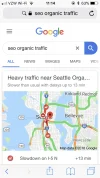
Google to End Organic Search as Commonly Known

Jason76

Madly Diligent
Joined
Nov 27, 2016
Messages
7,211
Reaction score
960
FP$
576
https://moz.com/blog/google-removing-organic-traffic

In this case, it is said one way to drive around the roadblock is simply to optimize for your own name. In other words, you want a huge buzz around your name so tons of people will be searching for it! I mean, in this new world, you won't be able to rank in Google keyphrases like you can now. Anyway, are you all prepared? Do you feel this new way is justified? Can you all rank for your own website name?
 
Whether Google wins this battle or not, getting thousands to come to your name alone is a nice advantage!
Added another URL, there are plenty of articles out there, and quite a few stories of comparison sites being crushed in regard to it.

As for the EU, it seems absolutely determined to make an example out of Google, so we'll have to see.
 
Google did the worst smashing in 2011. But then again, a lot of the sites didn't deserve top ranking. They were using shortcuts like "exact match domains".
 
I don't even understand this 😵 If I created a site, and also had a shopping option, the EU expects me to have other companies compete on my own site? 😵
There's no logical explanation. EU is stupid right now. And I don't even see them "making an example of" Google, they just want to fine google. I've been saying this for a while now: The GDPR is aimed at companies that locate their european counterparts in EU's area. Meaning, any corporation that has HQ's in U.S. that also has a HQ in Europe are all being taxed. They just don't give a shit.

Just because Google got big, does not mean it's a monopoly. If you wanted a search engine in EU, there's an opportunity to compete against Google.
Google did the worst smashing in 2011. But then again, a lot of the sites didn't deserve top ranking. They were using shortcuts like "exact match domains".
Yes, and no. You're talking about sites like mine, where I buy domains with "exact match" model (BlackOps4Forums.com for example), the problem isn't those domains. It's the owners that only buy a "exact match" domain, build the site, SEO it (as in, on-page), make a few articles, and be "hands off" waiting for the keywords to do all the work for him. He doesn't do anything with the site, yet he is #1 on google. Which is bullshit. So, you're saying that you can make a MW4 site, but I can't make one, and get anywhere close to #1 rank?

Right now, I've been seeing a lot of that over the last few years. I want my work to be rewarding. Google doesn't seem to be doing that.
 
Last edited:
I don't even understand this 😵 If I created a site, and also had a shopping option, the EU expects me to have other companies compete on my own site? 😵
Google is a monopoly, they have like 90% market-share in the search market.
And the E.U. has done this before with Microsoft and the browser choice screen.

To be frankly honest, it's surprisingly that the E.U. hadn't done anything already with all the anti-trust laws, this is probably because the person before Vestager was a push-over who blindly took Google's promises and assurances at face value and now they're mad at Google for playing them for fools.

This isn't the full story either. Google was actually downranking competing sites in their search results and blamed it on the "algorithm". Also, they've been steadily expanding their search options, from just general search to product search, airline search, etc. in response to new sites springing up.

And yes, if you are a monopoly, then you cannot step into new markets and use your weight to distort those markets. This is basically antitrust 101.

Antitrust law only applies to monopolies, in other words, companies with a ridiculously high market-share. That is the law. It really isn't anything new or even particularly strange, it's just that they've been getting away for it for so long.

The U.S. Government was even considering breaking up Microsoft at one point for abusing their monopoly, etc... Again, nothing new.
Just because Google got big, does not mean it's a monopoly
There's a very specific legally defined definition of a monopoly and that is market-share.
There is no argument or twist or whatever, they are a monopoly. The U.S. thinks so too, but they were satisfied with vague promises from Google.

Also, good luck competing with Google, they're practically the portal to the web, if they weren't twiddling their thumbs while it grew, they would have beaten Facebook black and blue.

Do you want to know how Chrome became the market leader? Because IE is bad? Ahahaha, no. It's because Google put up notices everywhere telling people to use. IE / Edge are default, who would be bothered to replace them, if not for Google's influence.

The E.U. has done a lot of stupid things, but this is probably the most level-headed and rational decision they've made in decades.
 
Last edited:
they would have beaten Facebook black and blue.
Are you referring to their Google Plus "social network"? If so, I doubt so 😛 Google Plus was destined to fail. And they did push Google plus hard. They forced it on its users and it still failed. (The merging of YouTube and Plus is an example of this when they said they wouldn't)


Do you want to know how Chrome became the market leader? Because IE is bad? Ahahaha, no. It's because Google put up notices everywhere telling people to use. IE / Edge are default, who would be bothered to replace them, if not for Google's influence.
There's a difference between forcing someone to use a browser (Microsoft) vs suggesting a new better browser. (Google) Yea Google had banners on their homepage to users using IE, but if IE wasn't so shit, people wouldn't have had a reason to switch.
 
Are you referring to their Google Plus "social network"? If so, I doubt so 😛 Google Plus was destined to fail. And they did push Google plus hard. They forced it on its users and it still failed. (The merging of YouTube and Plus is an example of this when they said they wouldn't)

There's a difference between forcing someone to use a browser (Microsoft) vs suggesting a new better browser. (Google) Yea Google had banners on their homepage to users using IE, but if IE wasn't so shit, people wouldn't have had a reason to switch.
All those price comparison sites which they kept de-ranking in their results because of the algorithm, while pushing their own properties to compete with them.

And no. Google Plus was a late reaction to Facebook, from when Larry Page personally took over as CEO again to help to course correct Google, only for the endeavour to go down in flames.

If they showed up during MySpace, long before Facebook became relevant, with something interesting, then combined with their marketing, Facebook would be dead in the water. Google Plus was quirky and weird because of they felt the need to be unique and w/e.

It's like how Ballmer laughed at Google's Search Engine, their little suite, and the iPhone only for them to be big successes.

Google still has banners on their homepages saying that Edge / IE are terrible and really slow. Microsoft seems to have responded with their own little notices which occasionally pop-up from the toolbar going on about how great Edge is.
 
Google is a monopoly, they have like 90% market-share in the search market.
In that region, the primary market-share isn't entirely to Google. Yandex, Bing (Microsoft), Seznam, Conduit, and Vinden are major players in Europe.
And the E.U. has done this before with Microsoft and the browser choice screen.
That's stretching it. Microsoft was very dirty with Windows/IE. They were packaging each Windows disc with IE installed right there in the software. On of that, the other practice they employed was forcing vendors to include Windows with each PC sold. I could go on and on, but those are the reasons why anti-trust was so fucking hard on Microsoft. And they're still doing it to this day. And guess what? The EU is laying down for Microsoft at this point, with their body naked. I'm sorry for the way I am saying it, but think of it that way. They just don't care about Microsoft anymore. And today, the anti-trust isn't coming down on Microsoft as it was before.
To be frankly honest, it's surprisingly that the E.U. hadn't done anything already with all the anti-trust laws, this is probably because the person before Vestager was a push-over who blindly took Google's promises and assurances at face value and now they're mad at Google for playing them for fools.
Well, if they're going to go after Google, they're going to need to go after Microsoft, too - since they service Bing. It's now embedded, and cooked into every goddamn device Microsoft ever launched in Europe. That includes Xbox branded consoles.
This isn't the full story either. Google was actually downranking competing sites in their search results and blamed it on the "algorithm". Also, they've been steadily expanding their search options, from just general search to product search, airline search, etc. in response to new sites springing up.
That's their fault for not optimizing EU sites. (I mean the Euro citizens.)
And yes, if you are a monopoly, then you cannot step into new markets and use your weight to distort those markets. This is basically antitrust 101.
No. Quite on the opposite. Google has been in Europe for as long as 2016 or even earlier. If you check the map of Google HQ's, you will notice that Google has been in that area for a very, very long time. They only recently announced their massive HQ in London in 2016/17/18. It's what caught EU's attention and created GDPR, fined them, and whatever else they want to do. This is why I see EU as the bad guy. And the worst part is, the world is watching. They're trying to make a spectacle of something that Google wanted to benefit to Europeans, rather than the antitrust they're getting from EU. I think the whole thing is one big misunderstanding and we're all collateral damage.
Antitrust law only applies to monopolies, in other words, companies with a ridiculously high market-share. That is the law. It really isn't anything new or even particularly strange, it's just that they've been getting away for it for so long.
No. Quite on the opposite. Antitrust applies to ANY company of any size. If you do something dirty. Slap on the wrist with a fine.

Here's a definition from a quick google search:
"relating to legislation preventing or controlling trusts or other monopolies, with the intention of promoting competition in business."

Further research lead me to this: "Antitrust laws are the laws that apply to virtually all industries and to every level of business, including manufacturing, transportation, distribution and marketing. They prohibit a variety of practices that restrain trade. Examples of illegal practices are price-fixing conspiracies, corporate mergers likely to reduce the competitive vigor of particular markets, and predatory acts designed to achieve or maintain monopoly power."

Meaning, if you, as a company, are trying to control consumer "trust" to lean things your way, despite the competition between yourself as a business person, and another person.

I took a class to learn this shit. It's not as complicated as you would be led to believe. If you dominate a sector, then you dominate a sector. Nothing more, and nothing less. That has to be done in an underhanded way to trigger the anti-trust. As is the case with the OEM's from Microsoft, and the inclusion of IE.
The U.S. Government was even considering breaking up Microsoft at one point for abusing their monopoly, etc.
That did go through. It's the same philosophy that Google now employs to avoid antitrust lawsuits.
There is no argument or twist or whatever, they are a monopoly. The U.S. thinks so too, but they were satisfied with vague promises from Google.
They're never vague. They promised job growth to come to London - any time a corporation of the size that Google is; announces a new HQ, job growth comes rushing in. Why do you think states HERE in U.S. are trying to catch Amazon's attention? It's because those states/cities are dying for more jobs in that area.

On the other hand, if Europe's concern was with the downranked sites in that area, Google could easily fix the problem by locating their business there. That was the other reason for the new HQ. But I think, by doing this, EU is scaring off Google. *shrugs*
Also, good luck competing with Google, they're practically the portal to the web, if they weren't twiddling their thumbs while it grew, they would have beaten Facebook black and blue.
Any company can compete with the big company. Anyone. Bing and Yandex are currently doing it.
Do you want to know how Chrome became the market leader? Because IE is bad? Ahahaha, no. It's because Google put up notices everywhere telling people to use. IE / Edge are default, who would be bothered to replace them, if not for Google's influence.
Same is true for Mozilla and Yahoo. Mozilla paid Yahoo to make those same advertisements to aid the growth of FireFox. Yes, FIRE. FOX. It was popular for a while, and made a dent on IE's marketshare, but has been beaten by Google. (I just double checked now, sadly.)
The E.U. has done a lot of stupid things, but this is probably the most level-headed and rational decision they've made in decades.
That's debatable. *laughs*
 
Last edited:
In that region, the primary market-share isn't entirely to Google. Yandex, Bing (Microsoft), Seznam, Conduit, and Vinden are major players in Europe.
Google's market-share is over 90%, it is a monopoly. The other players are irrelevant little insects. Bing is a disaster.

And if you would read the actual press release, they dropped the traffic of their competitors by 90% with their ruthless actions with the algorithm and we're not talking Bing or Yandex here, but the little comparison sites and other small folks.

And for many, many ***ing years, the E.U. kept prodding them and they kept making promises to improve and nothing ever happened. Don't even try to twist this into Google's favour.

To be even more frank, Google has probably already largely destroyed their competition and this action is far too late. You know those sites comparing prices for different sites, airlines, etc.? Yes. Those.
Well, if they're going to go after Google, they're going to need to go after Microsoft, too - since they service Bing. It's now embedded, and cooked into every goddamn device Microsoft ever launched in Europe. That includes Xbox branded consoles.
Oh please, no one uses Bing. Major players? Don't make me laugh. They are just insects.
 
Last edited:
Bing is a disaster.
...Or so, you thought. More on that later.
And for many, many ***ing years, the E.U. kept prodding them and they kept making promises to improve and nothing ever happened. Don't even try to twist this into Google's favour.
Maybe if EU was a little bit more patient, we wouldn't have GDPR, or any one of their own actions of giving Google the fines. Google heard them loud and clear, but these fines and the GDPR stuff will just push google off the negotiating table. It's not easy to find 1 Billion (in Euro dollars) just to build a massive HQ in London. Even before they made the choice of doing this, EU's job is to ask: Do I want a better Economy for EU? Do I want money? Because if you're going to fine a company with a $5 Billion fine, then might as well forget a bustling Economy. Google can make the promises. It's a matter of motivation. This fine is not that. It will just piss them off. Same goes for going after Facebook.
To be even more frank, Google has probably already largely destroyed their competition and this action is far too late. You know those sites comparing prices for different sites, airlines, etc.? Yes. Those.
This is not due to being a monopoly in Europe. They were a major player before they even got there.
Oh please, no one uses Bing. Major players? Don't make me laugh. They are just insects.
Wow. You're actually oblivious. Right under your noses, you guys don't realize anti-trust stuff is happening while you're off doing what you normally do. You don't need to type anything into Bing the search engine website. All you have to do is simply type it into the search bar, or use the voice program built and cooked into any Windows 10 machine. Bing is right there behind the "cortana" program. There's a reason why Microsoft's Kinect failed. A lot of people were concerned with privacy issues, not just with the camera, but with the voice controls.

Those voice devices by various companies such as Amazon; they actually rely on their own search engine algorithm. So, anytime you talk, that "result" is counted as accumulated total towards those keyword search totals.
 
Google heard them loud and clear, but these fines and the GDPR stuff will just push google off the negotiating table.
Google heard them loud and clear eight years ago when the E.U. first confronted them about suppressing their competitors (this very specific one they took action against), their competitors were doing fine, when Google decided to demote them to page 4 and push their own price comparison service.

They lost 90% of their traffic. Just like that.
That is what happens when Google aggressively enters a new market.
It's the pinnacle of naivety to assume Google will play nice when they never have before.
Wow. You're actually oblivious.
Bing is a worthless piece of trash compared to Google. It's doesn't even reach Google's toes. It has a tiny market-share. But, I'm sure that if they suddenly had 90% market-share due to Cortana, then the E.U. would fine them too.

But again, people tend to go to Google first for things. And to be frank, they really aren't relevant here. Are they capable of cutting 90% of a website's traffic on a whim? Not really, only Google has ever really had that power.

That's why people on Forum Promotion and all sorts of sites are terrified whenever Google so much as twitches and sweat about whether they'll be caught in the cross-hairs of some algorithm and do everything they can to rectify themselves.

Bing is so irrelevant that Jeff Atwood outright blocked their crawler because of it crawling instances of Discourse really aggressively. We like to pretend that these alt search engines are relevant so that maybe we can get like 5% more traffic, but again, they really are irrelevant in the grand scheme of things.

If Yandex delists your site, you probably won't so much as notice.
If Google does, you'll probably go bankrupt, if you rely on your site for your finances.

If they were outside of the market, then they could put them on page 1, 4, or 20... It really doesn't matter. But they moment, they launched their price comparison service, it became a conflict of interest, sites started getting conveniently down-ranked or de-listed, and they blamed it on the "algorithm".
It's not easy to find 1 Billion (in Euro dollars) just to build a massive HQ in London.
They already had a HQ in Ireland, you know, the place with the really low tax rates.
And then, the E.U. decided that they didn't want them to get out of paying tax (and before you say that it was unfair of the EU to do that, I know), and well, if they're going to move anywhere, might as-well go to London.
 
Last edited:
Google heard them loud and clear eight years ago when the E.U. first confronted them about suppressing their competitors (this very specific one they took action against), their competitors were doing fine, when Google decided to demote them to page 4 and push their own price comparison service.

They lost 90% of their traffic. Just like that.
That is what happens when Google aggressively enters a new market.
They were late. They have no basis to expand existing law into a bigger issue that it is now. GDPR was designed to hurt companies like Google, facebook, and rolling all the way down to the little guys. Here's an article explaining why it's late.
It's the pinnacle of naivety to assume Google will play nice when they never have before.
I never said they never played nice. I just said that Europe is the bad guy in this whole thing.
Bing is a worthless piece of trash compared to Google. It's doesn't even reach Google's toes. It has a tiny market-share. But, I'm sure that if they suddenly had 90% market-share due to Cortana, then the E.U. would fine them too.
Again, you're missing my point. Microsoft doesn't care about marketshare for Bing in the traditional sense, oh no, not anymore. Microsoft is now a fully integrated company.

You use E-mail? Hotmail has Bing hidden, and embedded in there. Not just ads, but also the search bar. Office is in there, too.
You use LinkedIn? (They just purchased them.) They are redesigning the site. It's naive to believe they won't install Bing in there, or Office.
You use Tablets? Surface ships with a custom version of Windows 10. Cortana is sitting on the lower left corner of the screen with Bing sitting in the background.
You use Phones? See Tablets.
You use Computers? See Tablets.
You use Xbox? It's actually underneath the entire console. Everything in Xbox is run by a Windows installation (including 10), and the search bar is powered by Windows. The Xbox Live store is actually communicating with both Windows Store and Bing.

One of these days, you'll understand the problem. For now, you're right, Bing is irrelevant. Thing is, it won't matter in the grand scheme of things.
They already had a HQ in Ireland, you know, the place with the really low tax rates.
And then, the E.U. decided that they didn't want them to get out of paying tax (and before you say that it was unfair of the EU to do that, I know), and well, if they're going to move anywhere, might as-well go to London.
They've been planning it since 2013, continued into 2016. Work started last year. So, this fine is stupid, if all they wanted was to correct the issue of downranked sites in EU, and to have a working relationship with google.
 
SEO is now all about brands and Google is right, though a monopoly. You cannot get manipulation if "branding" is an important factor. In other words, people would be literally searching for your brand.

For instance, the more people type in Forum Promotion via search engines, the more it would rank for competitive forum keywords.

Anyway, I don't think sites won't rank for competitive keywords as it seems suggested, only that the most "commonly searched brands" would get top spot, regardless of how many backlinks etc.. the competitors get.
 
Well if you've got a brand but Google (and most people) think that it isn't unique enough to consider that people searching for that term are intending to find you, then such a result that parallels this would seem appropriate.
 
Back
Top Bottom